
Dell’s Double Engine: AI Inference and Data Sovereignty
Agentic inference is driving compute demand while data sovereignty pulls workloads closer to enterprise-controlled infrastructure

Dell’s AI opportunity is best understood as a double engine.
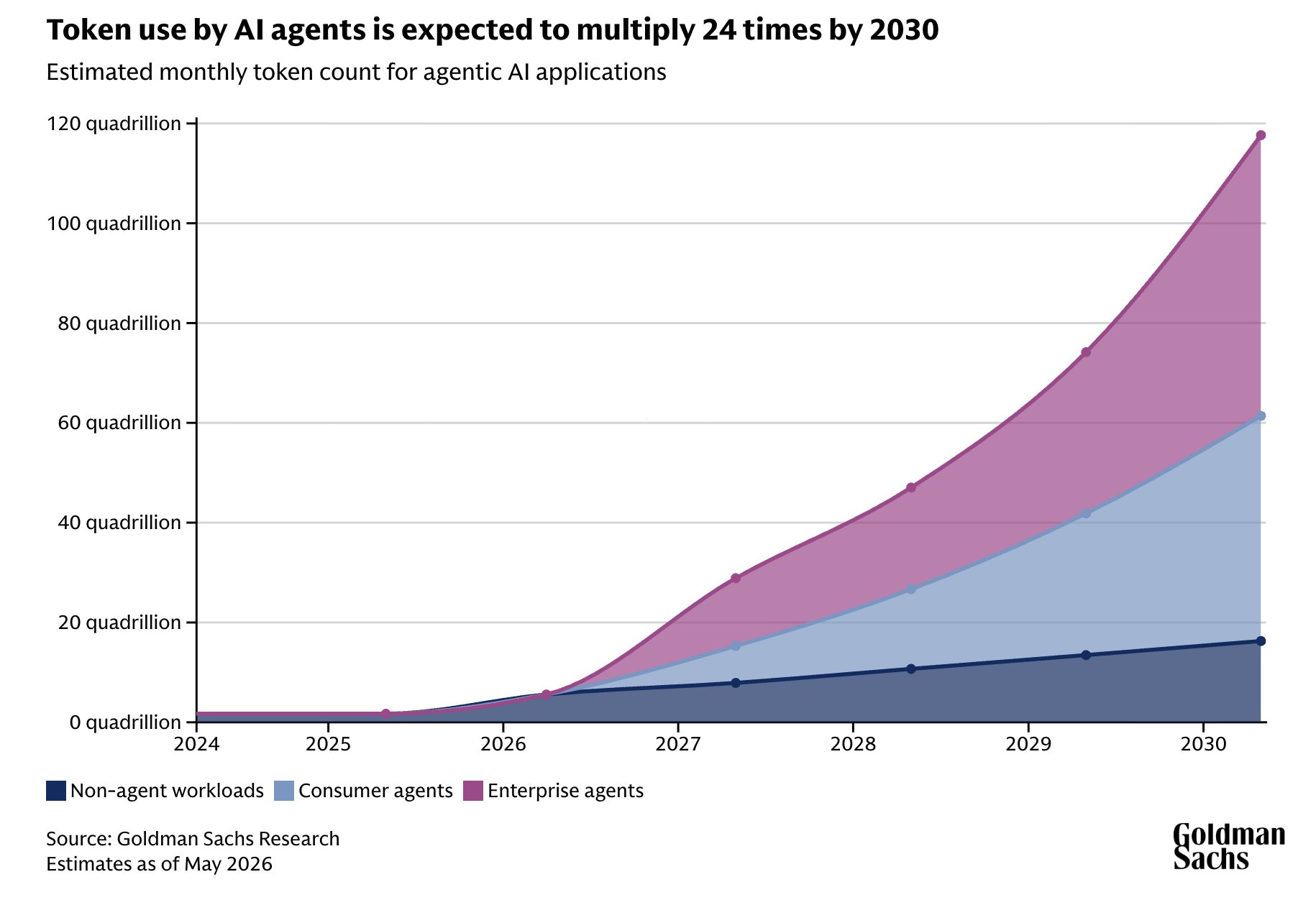
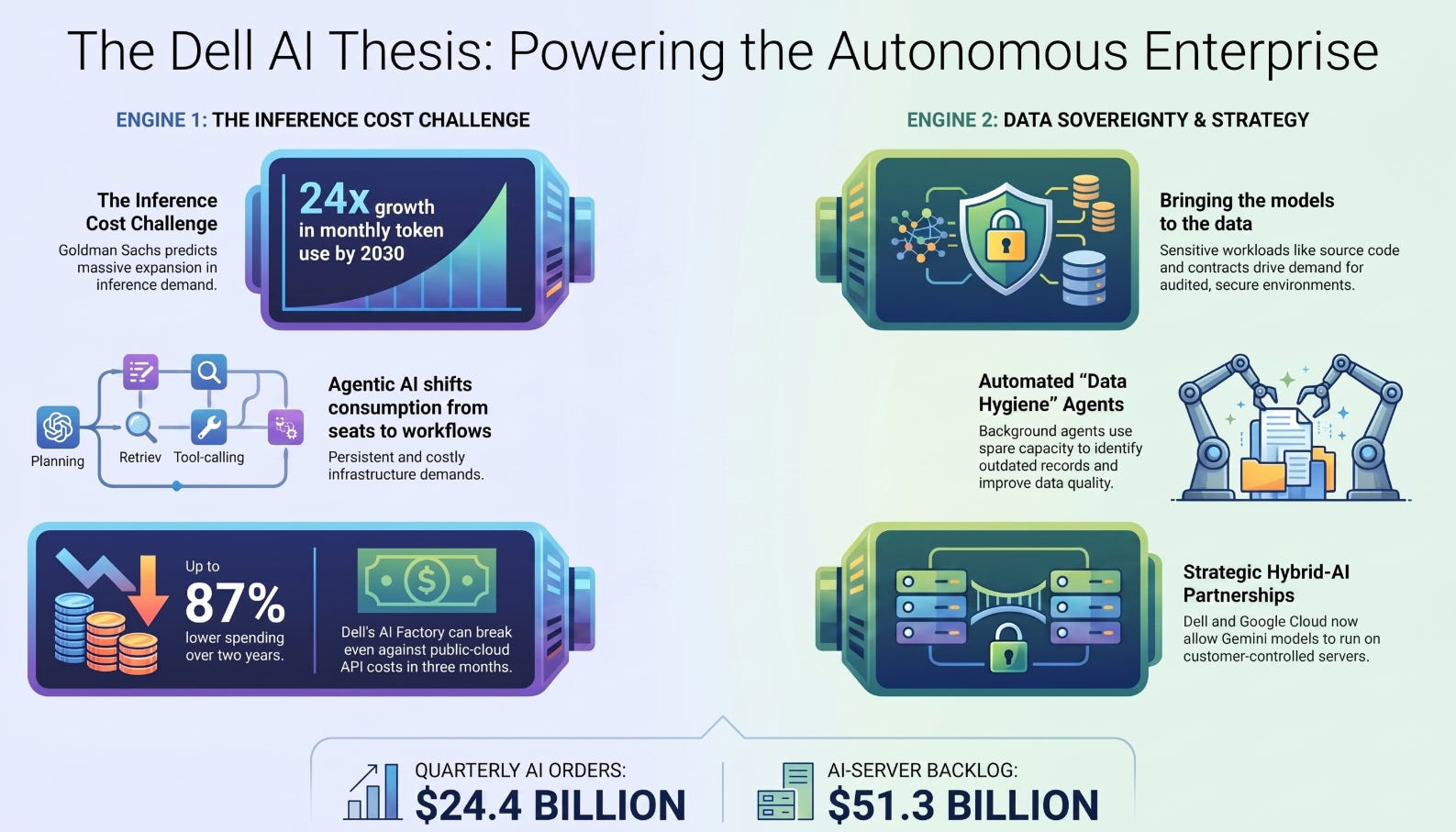
The first engine is the rapid expansion of agentic-AI inference. Goldman Sachs estimates that monthly token use for agentic-AI applications could increase 24-fold by 2030, with enterprise agents responsible for much of the projected growth. As those agents plan, retrieve, call tools, validate results, and complete multi-step workflows, they create a persistent and increasingly costly demand for inference infrastructure.
The second engine is data sovereignty. The more useful an enterprise agent becomes, the more deeply it must access proprietary information: customer data, source code, contracts, financial records, internal documents, and operational systems. That creates pressure to run important workloads nearer to the data, inside environments enterprises can audit, secure, and govern.
Together, these forces could propel Dell from a conventional server supplier into a more strategically important provider of hybrid-AI infrastructure. Dell does not need to replace the cloud. It needs enterprises to decide that their highest-volume, most sensitive, and most persistent AI workloads should run on infrastructure they control.
The Dell thesis rests on two connected engines:
Agentic AI turns sustained inference into a significant infrastructure-cost challenge.
Sensitive enterprise data makes private, governed AI deployment more valuable.
Neither trend requires the cloud to disappear. Both could expand the hybrid-AI market and strengthen Dell’s position as the infrastructure layer underneath it.
The Tokenomics Problem
Traditional enterprise software generally scales with seats. Add users, add licenses, and the expense profile is relatively understandable.
Agentic AI changes the unit of consumption. An AI agent does not merely generate one answer. It can plan, retrieve documents, query a database, call a model, invoke a software tool, test a result, retry, and hand work to another agent. Each step consumes inference capacity.
The resulting cost is not simply a function of how many employees have access to AI. It depends on how frequently agents run, the length of their context windows, the models they use, the number of tools they call, the complexity of each task, and whether a workflow converges efficiently.
This creates a new enterprise question:
When does recurring cloud inference spending become large enough that owning, colocating, or tightly governing the infrastructure becomes economically rational?
Dell is positioning its AI Factory as an answer for sustained, high-volume inference workloads. The company says its Deskside Agentic AI offering can break even against public-cloud API costs in as little as three months and lower spending by up to 87% over two years.
These are Dell-provided modeled outcomes not universal results. Utilization, electricity, cooling, hardware depreciation, staffing, model selection, financing, and cloud discounts all affect the calculation.
The core idea is not that on-premises systems always beat the cloud. It is that a cloud-only approach will not be optimal for every workload.
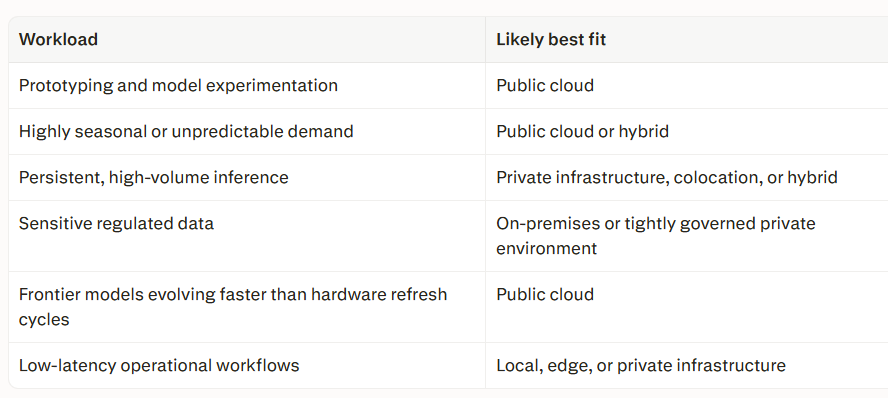
Dell’s opportunity lives in the middle of that table: workloads that are persistent, data-rich, cost-sensitive, and strategically important enough that enterprises want greater control.
Engine One: Inference Infrastructure
Dell is building hardware across the deployment spectrum.
For local development and smaller-scale inference, Dell Pro Max with GB10 supports models up to 200 billion parameters for FP4 inference, according to Dell, with multi-node configurations extending that capacity.
At the high end, Dell Pro Max with GB300 brings NVIDIA Grace Blackwell Ultra capabilities to a deskside form factor designed for advanced autonomous-AI workloads. Dell has positioned the platform for deployments involving models that can scale toward the trillion-parameter class.
The investment case is bigger than any individual workstation. Enterprise AI requires compute, storage, networking, cooling, security, lifecycle management, support, and a software ecosystem that works across models and accelerators. Dell can sell the integrated system rather than just a component.
It also gives customers hardware choice. Dell’s PowerEdge XE9680 supports Intel Gaudi 3 accelerator configurations alongside its NVIDIA-focused portfolio, strengthening the company’s pitch as an AI-infrastructure provider rather than a single-chip solution.
This flexibility matters. Enterprises are unlikely to standardize permanently around one model provider, one API, one cloud platform, or one accelerator. They will route workloads based on cost, performance, latency, data residency, availability, and governance.
Dell can benefit from that fragmentation if it becomes the trusted physical and operational layer beneath it.
Engine Two: Data Sovereignty
The economics of agentic AI are only half the story. The other half is data.
Agents become more useful as they gain access to internal context: customer records, product documentation, source code, supply-chain data, financial records, contracts, support histories, and operational workflows. But deeper access also raises the stakes around privacy, intellectual-property protection, auditability, retention, permissions, and jurisdictional compliance.
For many organizations, the answer will not be to move all enterprise data to a public-cloud model. It will be to bring models closer to the data.
Dell and Google Cloud have announced Gemini 3 Flash availability through Google Distributed Cloud on Dell PowerEdge XE9780 servers, allowing AI workloads to run in customer-controlled environments. The offering targets organizations whose security, sovereignty, and governance requirements make conventional public-cloud deployment more difficult.
This does not mean public-cloud AI is inherently insecure. It means deployment architecture should match workload sensitivity. A consumer assistant and an agent navigating a source-code repository, financial system, or compensation database do not carry the same risk profile.
That distinction gives Dell a strategic opening. It can provide systems for enterprises that need strong AI performance without treating proprietary information as a freely movable input.
The Quiet Opportunity: Data Hygiene
The most valuable enterprise agent may not be the customer-facing chatbot. It may be a quiet background system improving the data every other agent depends on.
Dell CTO John Roese has discussed “hygiene” and “steward” agents that identify incomplete, outdated, or inconsistent enterprise information, including CRM data.
This is an underappreciated use case. An agent cannot reliably provide high-quality answers if it retrieves inaccurate customer records, conflicting policies, obsolete documents, or badly classified data.
Background agents can help organizations:
Detect duplicate, incomplete, or stale records
Flag anomalies in financial and operational data
Identify knowledge-base content requiring review
Keep product, customer, and workflow information current
Route ambiguous changes to human approval
Spare compute capacity is not free; enterprises still incur capital, energy, cooling, and operations costs. But using available capacity for data-quality work can lower the incremental cost of a task that often receives too little attention.
The feedback loop is attractive: cleaner data improves agent performance; better agent performance reduces manual rework; and less rework improves the return on AI infrastructure.
The Market Re-Rating

Investors are beginning to price in this thesis.
Dell’s monthly chart shows a sharp upward expansion in price, with shares near $490.81 in the latest chart and well above their longer-term moving-average trend lines. The trend signals powerful momentum and an increased investor willingness to price in Dell’s AI-infrastructure opportunity.
Recent coverage cited roughly $24.4 billion in quarterly AI orders and a record $51.3 billion AI-server backlog. Those figures point to significant demand, but backlog is not revenue, and revenue is not automatically high-margin profit.
For Dell’s equity story to continue working, it must turn orders into profitable shipments, manage component costs and supply constraints, defend margins, and create durable enterprise relationships through systems integration and support.
For a technical analysis and trade plan, check out our other Dell article published today.

The Bottom Line
Dell does not need to defeat the cloud. It needs enterprises to keep their most persistent, data-intensive, and sensitive AI workloads on infrastructure they can control.
If agentic inference becomes more distributed, enterprise-centric, and security-sensitive, Dell could evolve from a server vendor into a key infrastructure provider for the autonomous enterprise. The key test is whether it can convert AI demand and backlog into profitable shipments while protecting margins.
Disclosure: This article is for informational purposes only and is not investment advice. I may hold positions in securities discussed.